How Polio Vaccination Workers Made India a Polio-Free Nation, Saving Nearly 4 Lakh Children Annually

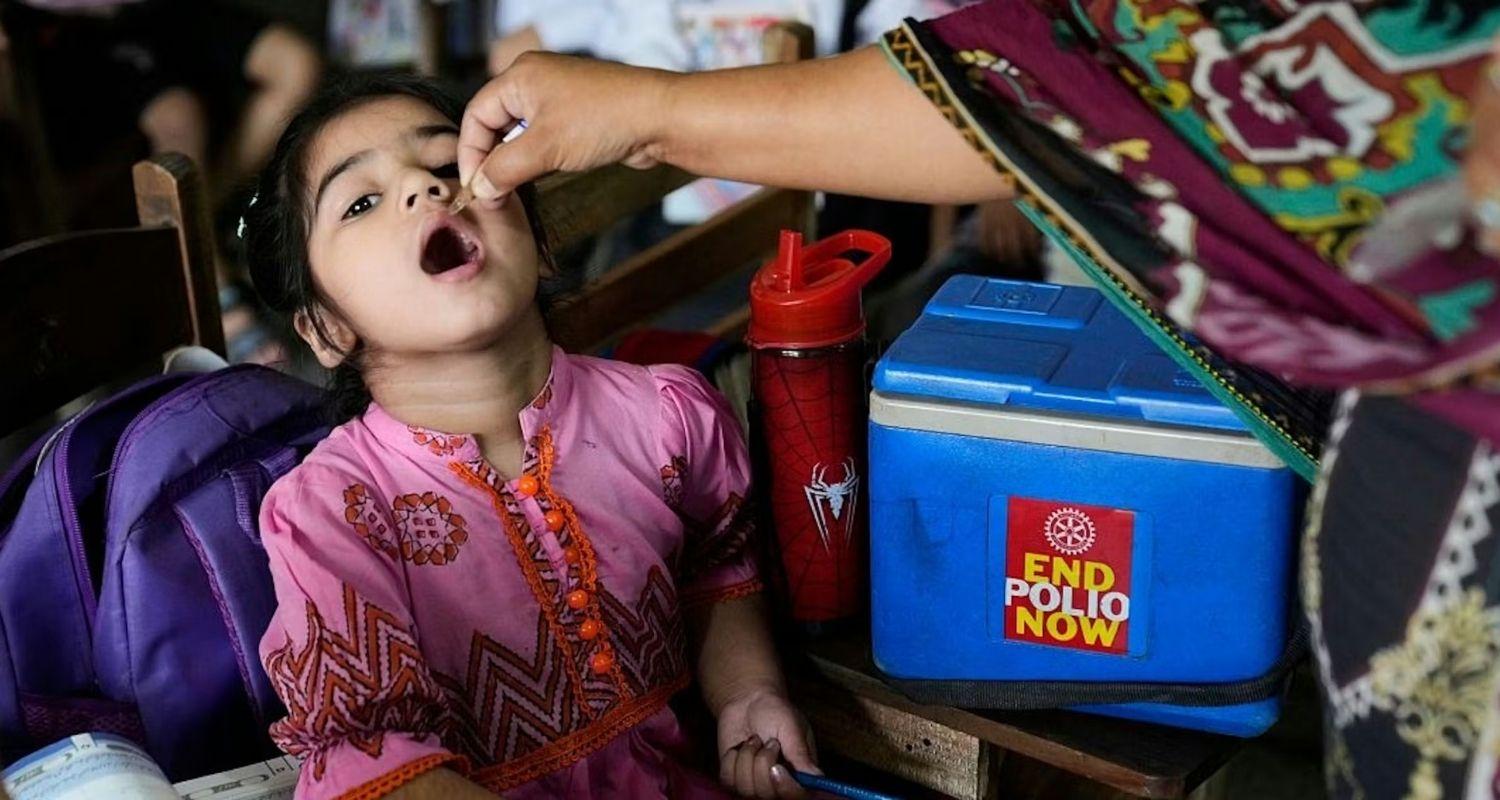
In what marked a major milestone for India, on February 24, 2012, the World Health Organization (WHO) removed India — the country with historically the highest burden of polio with 200,000 to 400,000 cases annually— from the list of polio-endemic countries after no wild poliovirus had been detected in India since January 13, 2011. While the names of many large organizations, international agencies, and the government come to the forefront in the history of India’s polio eradication, however, the success only came because of the unrelenting efforts by countless unsung vaccination workers—whose names never made headlines. These unsung heroes were the force behind India’s polio eradication campaigns, through which India saved approximately 393,918 children from paralysis or death caused due to polio. One such person is 70-year-old Mr. Ramnaresh Mahato, an ordinary man with an extraordinary dream.
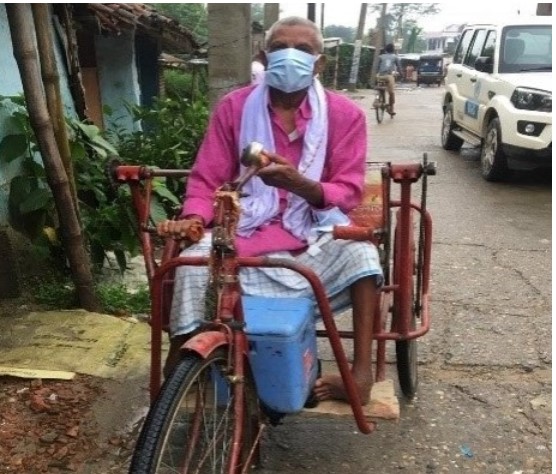
Mr. Ramnaresh Mahto | Image Source: WHO
Joining as a Volunteer Vaccination Worker
Ramnaresh Mahato was born into a humble rural family. As a child, he himself suffered from polio. He also witnessed the suffering of children afflicted with polio in his own village, some unable to walk, others becoming permanently disabled. That sight left a deep impression on his mind. He understood that polio is not just a disease; it can snatch away a child’s entire future. This realization shaped his life’s purpose. When the polio vaccination program was intensified in India, specifically between 2012 and 2014, Ramnaresh Mahato voluntarily joined as a vaccination worker. He had his own family to support, and his income was meager, yet he did not waver. He would say, “If I can save a child from polio, that will be my greatest reward.” Thus, his efforts, along with the efforts of many other polio vaccination workers, made India polio-free by February 24, 2012, with the World Health Organization (WHO) removing India from the list of polio-endemic countries. Consequently, on March 27, 2014, India was officially declared polio-free.
India Becoming Polio-Free: The Greatest Achievement of His Life
When India was officially declared polio-free in 2014, tears welled up in Ramnaresh Mahato’s eyes. He said, “This success is not mine alone. It belongs to millions of vaccination workers across the country.” But the truth is that even though the contributions of people like Ramnaresh Mahato may never be fully documented in history, this success would have been impossible without them. India’s story of becoming polio-free is not just about statistics; it’s a history of the silent sacrifices of countless people like Ramnaresh Mahto. He is now nearing 75 years of age. Even after retiring from government service, he hasn’t stopped completely. To this day, he raises awareness about polio vaccinations in villages, explains its importance to parents, and encourages new vaccination workers to take up the work of immunizing children in India.
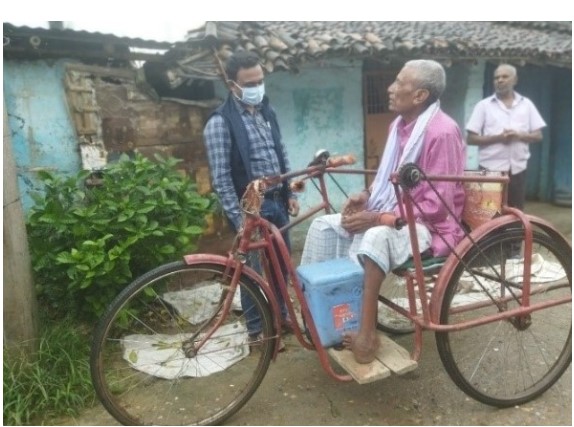
Mr. Ramnaresh Mahto | Image Source: WHO
He says, “As long as my body allows, I will stand by the children.” But he is not alone in this journey. His daughter, Mrs. Ranju Devi, a volunteer vaccinator in the village, now helps him by bringing vials of bivalent OPV (bOPV) from a sub-depot 4 kilometers away from their home. Mrs. Devi then begins her rounds, visiting homes in Athari village of Runnisaidpur block in Sitamarhi district, Bihar, to administer OPV doses to children under 5 years of age. Mr. Mahto says, “I feel extremely fortunate to be able to support my daughter’s mission to save children from polio and disability.” Her commitment to vaccinating all children is also driven by personal tragedy: She lost her youngest son to cancer and grew up witnessing her father’s limited mobility due to polio.
How India Made This Happen?
During the 1970s, 1980s, and continuing into the early 1990s, polio was hyperendemic in India, with 200,000 to 400,000 cases annually. However, the 1990s marked the decline of polio in India. India’s fight against polio took a significant step forward on 2nd October 1994 in Delhi when the first large-scale polio vaccination campaign was held. The campaign used an Oral Polio Vaccine (OPV) strategy, reaching over 1 million children and ensuring every child under five was vaccinated. The campaign became iconic, with the slogan “Do Boond Zindagi Ki” (Two drops of life) becoming synonymous with India’s efforts to eliminate polio. Subsequently, in 1995, the Pulse Polio Immunization Programme was launched, scaling up the nationwide immunization campaign.
At the same time, India also strengthened its routine immunization efforts under the Universal Immunization Programme (UIP) in 1985. The UIP provided free vaccines against polio, diphtheria, pertussis (whooping cough), tetanus, measles, hepatitis B, and tuberculosis, ensuring that children received vaccinations as per the national immunization schedule. Through these routine efforts, India aimed to maintain high immunity levels and prevent the re-emergence of vaccine-preventable diseases. In 2011, India saw the last case of wild poliovirus in Howrah, West Bengal in a two-year-old girl. Following that, the country ramped up its surveillance efforts, and no further wild poliovirus cases were reported. This led to WHO removing India from the list of polio-endemic countries on February 24, 2012.
During the period of 2012-2014, on each National Immunization Day (Pulse Polio) — i.e., on March 16, when India’s first dose of polio immunization was introduced in 1995 —17-22 crore children were vaccinated. This was the largest human resource-based campaign in world history. At that time, approximately 2.4 million vaccinators and 150,000 supervisors worked together. The vaccination program was conducted at 700,000 booths across the country. As a result, after three years of no wild poliovirus cases in India, on 27th March 2014, India was officially declared polio-free.
The success of the campaign echoes through the number of children saved. India’s National Program against Polio saved approximately 393,918 children from paralysis or death by polio through routine immunization campaigns, under which 12 billion doses were administered to 172 million children annually, according to research conducted by the Indian Pediatrics. Thus, from 2012 to 2014 India vaccinated 172 million children against polio, which is 3 times the total number of children (60 million) in the United States, 2.5 times the total number of children (nearly 70 million) in the European Union, consisting of 27 countries, and more than double the number of children (approximately 80 million) of all Five Eyes nations (US, UK, Canada, Australia, New Zealand) combined.