Cracking ‘Kashmir Princess’: How R.N. Kao Solved the Case That Shook China, India, & World

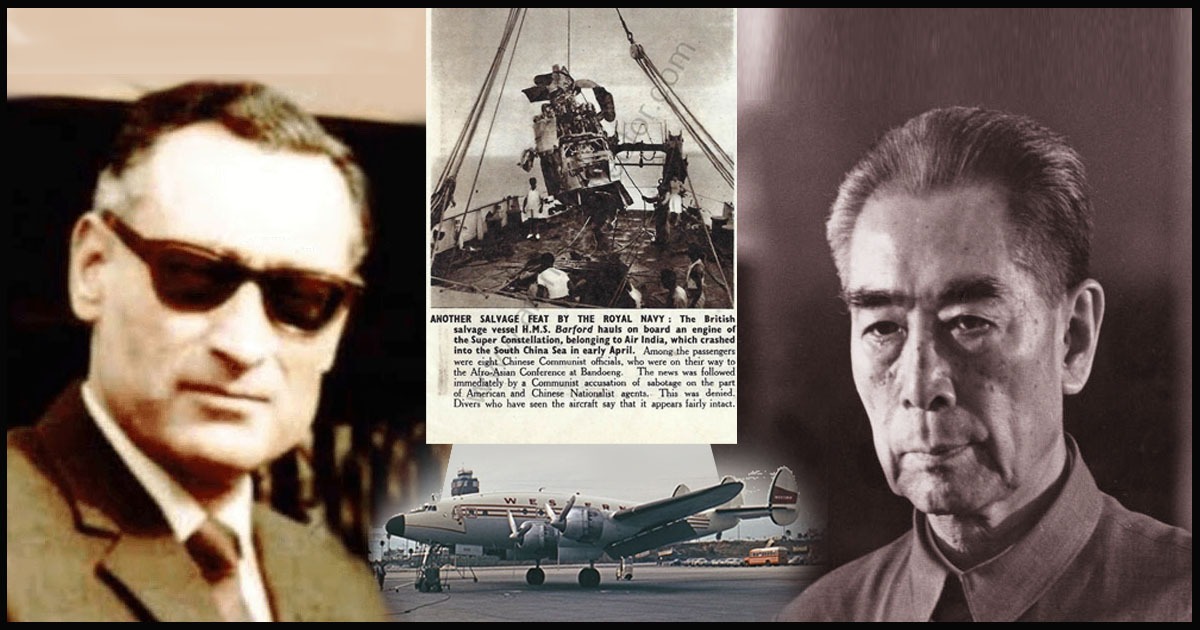
13 years before India got its intelligence agency, the Research and Analysis Wing (R&AW), its founder and spy master, R.N. Kao, uncovered a brilliant assassination plot through his investigation of the Kashmir Princess incident. As we remember on his death anniversary (January 20), we explore how the young Indian intelligence officer, aged just 37 at that time, solved an extremely complicated sabotage of the Air India aircraft, the Kashmir Princess.
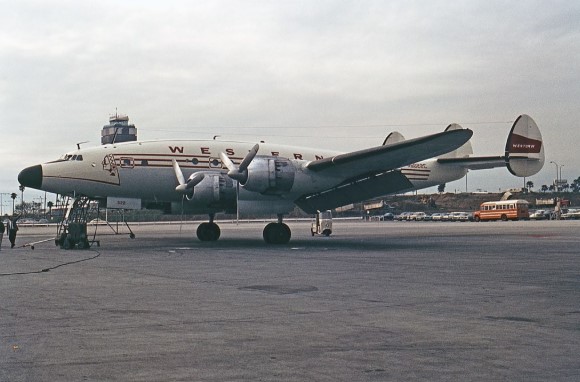
The Kashmir Princess was a chartered Lockheed L-749A Constellation (representational image above) | Image Credit: Jon Proctor via Wikimedia Commons
First, let us understand what exactly the Kashmir Princess incident was, and how the Indian intelligence officer R.N. Kao solved the geopolitical mystery that became a major turning point in his career.
The Kashmir Princess Incident
The tragedy unfolded when Asia was preparing for the Afro-Asian conference at Bandung, Indonesia, scheduled from April 18 to April 24, 1955. For this, China chartered Air India Flight 300, also called Kashmir Princess, to fly its delegates, including the Chinese Premier Zhou Enlai. While all the delegates took the flight, the Chinese Premier changed his plans at the last minute and did not board the plane. According to the September 1994 edition of The China Quarterly, written by Steve Tsang, probably Zhou knew of the plot beforehand and secretly changed his travel plans.
On April 11, 1955, five hours after the flight took off from the British-occupied Hong Kong, an explosion tore through the starboard side of the aircraft, with smoke flooding the cabin and fire engulfing the engine. Captain D.K. Jatar, one of Air India’s most experienced pilots, attempted an emergency landing over the South China Sea; however, the aircraft broke apart. Only three crew members survived — flight navigator Pathak, aircraft mechanical engineer Karnik, and co-pilot Dixit.
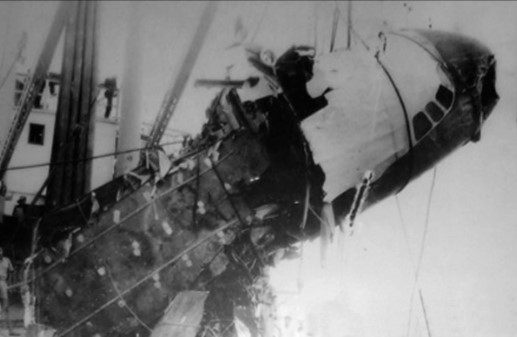
The Air India flight ‘Kashmir Princess’ crashed near the South China Sea | Image Source: The China Project
China quickly raised accusations against the United States, the United Kingdom, and against Chiang Kai-shek, the President of the Republic of China (Taiwan), who was also the head of the Kuomintang (KMT), the Nationalist Party that had retreated to Taiwan after losing the Chinese Civil War. Hong Kong, too, was targeted over a possible security lapse. And given that it was an Indian aircraft, subtle insinuations circulated in Chinese media against India, too. In such a charged geopolitical landscape stepped in R.N. Kao.
How R.N. Kao Got the Responsibility to Investigate Kashmir Princess Sabotage?
Kao was at that time part of the Intelligence Bureau (IB), responsible for VIP security, including that of the Prime Minister Jawaharlal Nehru.
He was already in charge of high-sensitivity security matters, making him a likely candidate for the assignment. With stakes high for India too, then-PM Nehru insisted that Kao investigate the matter, setting up a meeting with the Chinese Premier at the Bandung conference, where R.N. Kao was also present incidentally. RNK was with Zhou Enlai for over an hour and then retired for the night.
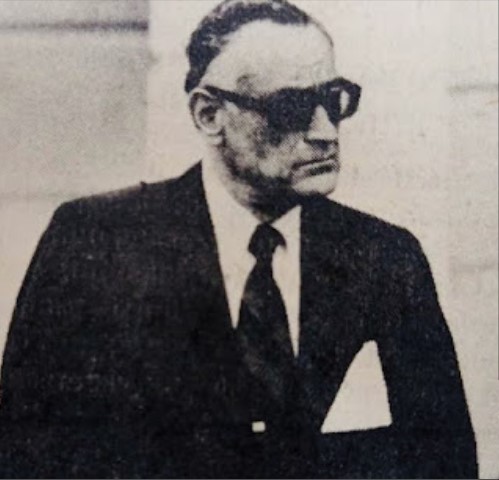
R.N. Kao, the Indian spy master and first chief of R&AW | Image Source: Infinity
As Kao began to investigate the Kashmir Princess sabotage, he got the taste of the first major foreign assignment, which involved China, Hong Kong, India, Indonesia, and the US. During the investigation, he had several meetings with the Chinese Premier. Kao had no real ally and was all alone in foreign lands. Yet he approached the investigation with exceptional patience, neutrality, and methodical precision. He heard the testimonies of the three survivors — co-pilot M.C. Dixit, engineer Anant Karnik, and navigator J.C. Pathak. He further reconstructed the sonic pattern of the blast, its location, and the rapid spread of fire. However, cultural barriers, diplomatic tensions, and linguistic hurdles made the environment difficult for Kao.
R.N. Kao’s Unmasking of the Mastermind
Six months after the tragic incident, in September 1955, the young spy-master’s hard work and rigour finally paid off. A clear pattern began to emerge, one that pointed far away from India and brought attention to Hong Kong, the place where the assassination plot came together. With preliminary findings in hand, R.N. Kao sent an official message to Premier Zhou Enlai, who called him to Beijing.
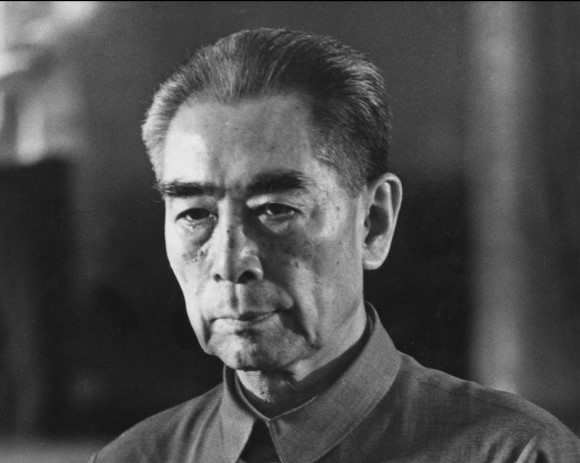
Zhou Enlai, the-then Chinese Premier | Image Source: The Strategist
During the meeting, Zhou Enlai came quickly to the point and asked RNK to give up-to-date information about what he had learned from the survivors. Based on what Pathak and Karnik had told him, RNK described the details of the bomb, where it was placed, and what effect it had on the plane’s engines that led to the crash. As RNK was explaining the sequence of events, he offered to draw a sketch.
He explained that the investigations had led him to a critical figure — Chou Chu, a Taiwanese national employed as part of the ground maintenance crew of the Hong Kong Aircraft Engineering Company. Kao detailed how Chu had access to the aircraft during its halt at Kai Tak Airport in Hong Kong and was tasked with placing a time bomb in the Air India aircraft. For the completion of the task, he was promised a reward of 6,00,000 Hong Kong dollars by a Taiwanese spy, Wu Yi-chin. The Taiwanese intelligence operative also guaranteed Chu’s escape to Taiwan, from where he could not be extradited and live freely.
But, Chou Chu was only the puppet to deploy the bomb; the mastermind behind the plot was Chiang Kai-shek, the exiled Chinese leader who ruled Taiwan. Chiang had been planning to assassinate Zhou Enlai for a long time before the Bandung conference. However, when Zhou Enlai’s schedule to travel to the conference on board the chartered Air India flight became public, Chiang’s intelligence operatives seized the opportunity.
Implications of Kao’s Investigations and His Legacy
Kao’s thorough investigation into the Kashmir Princess incident eliminated any doubts against India that were cast by sections of the Chinese media. R.N. Kao’s investigation proved that Indian soil, Indian staff, or the Indian agencies had no role whatsoever in the assassination plot. A later inquiry by Indonesia further corroborated Kao’s findings that the bomb was equipped with an American-made MK-7 detonator and was certainly planted in the aircraft on Hong Kong soil. The investigations have also marked a turning point for R.N. Kao, who had then just started his career. The case not only earned him respect among the foreign nations and dignitaries he worked with, but also placed him on a trajectory that would eventually lead to the founding of India’s intelligence agency, the Research and Analysis Wing (R&AW) on September 21, 1968, with him becoming the first chief.