The Story Pakistan Won’t Tell on Kashmir Solidarity Day: The Massive Infrastructure Failure in PoK

Every year on February 5, Pakistan observes “Kashmir Solidarity Day” to put on a show of “standing in unity” with Jammu & Kashmir, while the part of Kashmir that it had occupied (Pakistan-occupied-Kashmir) on October 22, 1947, stands in ruins. The truth is, while Pakistan claims to stand for the people in J&K, the region that it occupies tells a story of infrastructural neglect so deep that it has triggered repeated public uprisings. The standing infrastructure in every region, be it roads, hospitals, railways, universities, or electricity access, is not rhetoric, but a lens to examine if a region is truly flourishing or not. If we compare PoK, officially termed “Azad Jammu & Kashmir,” to Jammu and Kashmir, this contrast of infrastructural development is devastating. Today, through this article, we have tried to expose the glaring hypocrisy at the heart of Pakistan’s narrative on Kashmir as we look into four main pillars of infrastructure — connectivity, healthcare, education, and electricity.

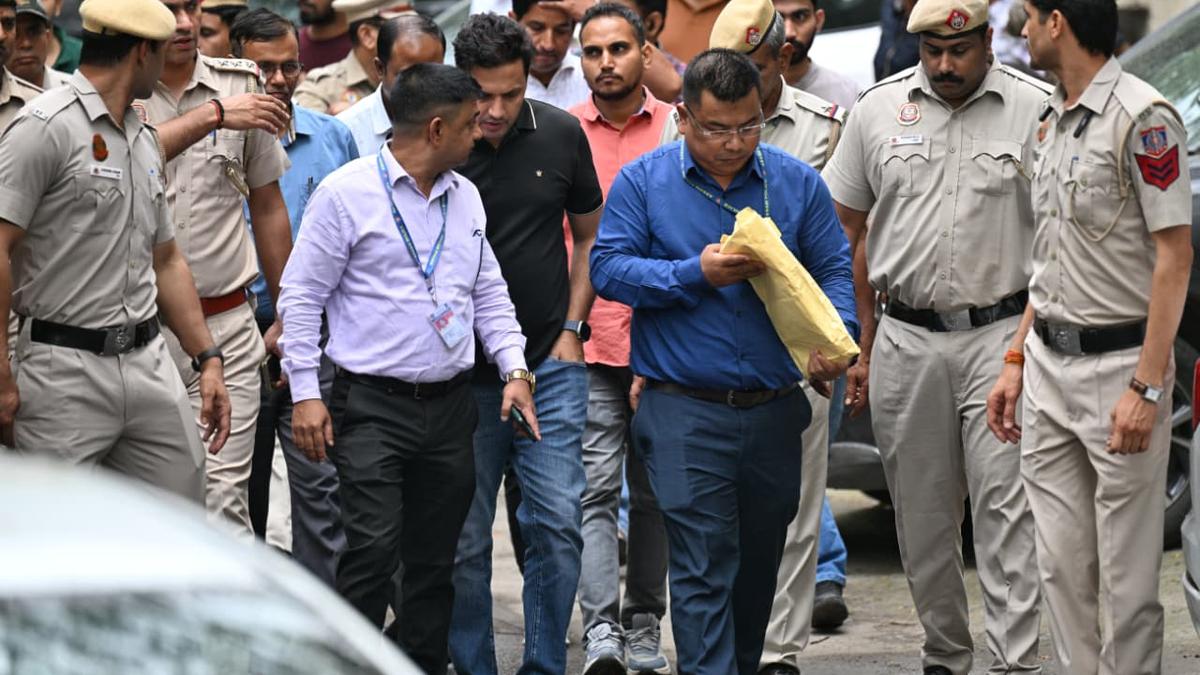
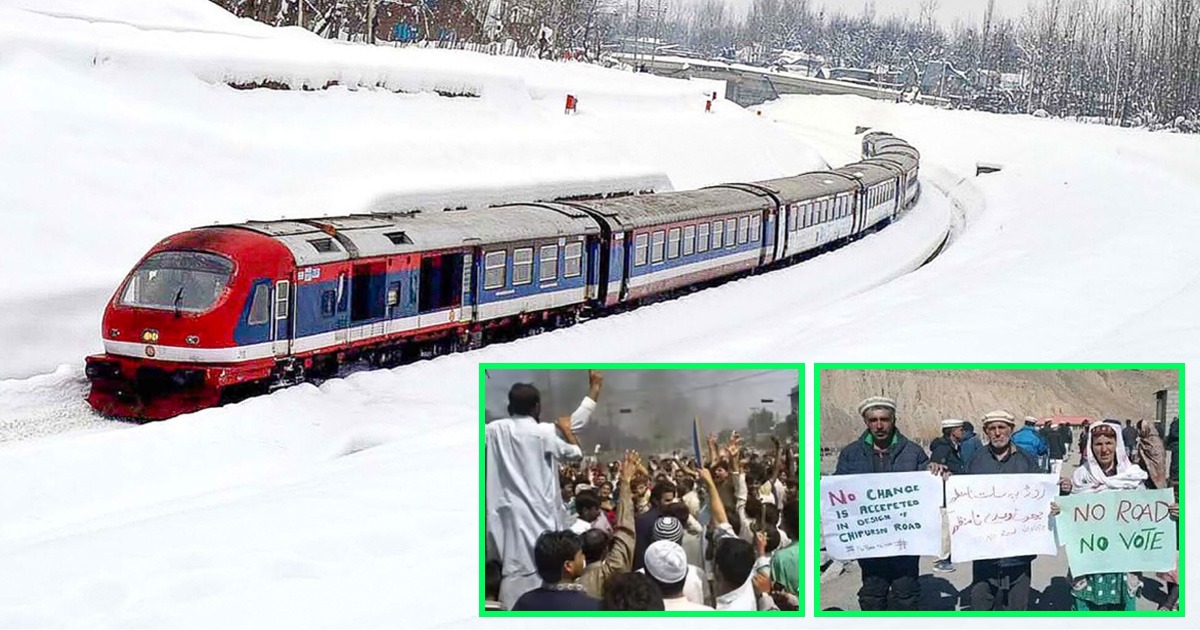
Protests erupt in Pakistan-occupied-Kashmir against the Pakistan government | Image Source: ANI
Absence of Connectivity
Jammu & Kashmir spans 42,241 sq. km square kilometres and supports a population of around 1.37 crore to 1.6 crore as of 2025-2026, based on projections from the 2011 Census. Pakistan-occupied Kashmir, by comparison, covers 13,297 square kilometres with a population of over 40 lakh, based on the 2017 census. Despite the smaller size and population, PoK has not received proportionate investment, instead the opposite. Modern development begins with connectivity. Jammu & Kashmir today is fully integrated into India’s transport network. It has 28 railway stations — with key hubs like Jammu Tawi, Budgam, and Srinagar undergoing modernization, operational rail connectivity, expanding 36 tunnel networks, and four functional airports that support tourism, emergency healthcare, and economic movement. The 272-km Udhampur-Srinagar-Baramulla Rail Link (USBRL) was fully completed and operationalized in June 2025, linking the Kashmir Valley directly to the national network.

Udhampur-Srinagar-Baramulla Rail Link (USBRL) | Image Source: The Hindu
Pakistan-occupied Kashmir, on the other hand, has no railway stations at all. Not a single rail line connects its towns or districts. Entire regions remain dependent on fragile road infrastructure of about 5,000-6,000 km of roads, vulnerable to landslides, weather disruptions, and shutdowns. While J&K debates high-speed rail and logistics corridors, PoK still struggles with basic mobility, an astonishing reality.
Healthcare & Education: Somewhere Abundance, Somewhere Scarcity
Healthcare infrastructure further exposes the imbalance. Jammu & Kashmir today has 2,812 hospitals, including AIIMS Jammu in Samba district, supported by 35 universities and 9 medical colleges, creating a steady pipeline of trained doctors and specialists. PoK, in contrast, has just 23 hospitals, six universities, and only one medical college for its entire population. Advanced treatment often requires travel deep into Pakistan, making healthcare inaccessible for large sections of society.

Drone shot of AIIMS Jammu in Samba, J&K | Image Source: Daily Excelsior
Education is the backbone of long-term development; however, in PoK, it remains skeletal. The region has failed to equip its youth with the skills necessary for modern employment. The result is visible in a higher unemployment rate, outward migration, and long-term economic stagnation. WaterAid Pakistan reports over 50% lack in clean drinking water, causing 3,000+ deaths annually from waterborne diseases, while 90% of water sources are deemed unsafe.
The Electricity Paradox
Perhaps the most bitter irony of PoK’s condition lies in electricity. Despite hosting major hydropower resources, residents of PoK pay some of the highest electricity tariffs in the region, which were settled at PKR 3 per unit for 1–100 units, PKR 5 per unit for 100–300 units, and PKR 6 per unit for over 300 units in May 2024, following widespread protests against high costs.
Electricity generated in Kashmir flows outward; the burden of cost remains local. PoK’s rivers, like the Jhelum, power Pakistan’s cities, but its own people live in the dark. Residents of Muzaffarabad in Pakistan-occupied Jammu and Kashmir (PoJK) continue to suffer from severe electricity shortages and prolonged load-shedding, despite hosting the multi-billion-rupee Neelum-Jhelum Hydropower Project.

Thousands tear electricity bills to protest against rising power tariffs | Image Source: Dawn
Across the LoC, A Different Reality
Infrastructure shapes livelihoods. Jammu & Kashmir recorded 2.11 crore tourist arrivals in 2023, including over 50,000 foreign tourists, supported by airports, roads, hotels, and public safety infrastructure. However, in PoK, despite similar geography, it remains largely absent from tourism circuits. There is poor connectivity, a lack of facilities, and political instability that have prevented tourism from translating into income or employment.
While civilian infrastructure in PoK remains threadbare, the region hosts over 60 identified terror camps. Railways were never built, hospitals remained underfunded, but terrorist infrastructure has thrived. Shockingly, in the civilian regions of PoK, there lie vast terror camps. UN Human Rights Council report of March 2025 details that terrorist recruitment and training camps operate in PoK, intimidating locals into silence. In May 2025, India exposed the same when, during Operation Sindoor, it struck Lashkar-e-Taiba and Jaish-e-Mohammed’s terror camps at nine locations in PoK.
The Irony of February 5
Instead of observing the Kashmir Solidarity Day, Pakistan must first look within Pakistan-occupied Kashmir and not across the Line of Control (LoC). Before standing with Jammu & Kashmir, Pakistan must first listen to the demands and cries of those in PoK. The need of the hour is to stand in solidarity with a region that has occupied, because while Jammu & Kashmir is flourishing with development projects such as the world’s highest railway bridge, Chenab Bridge, in PoK, on the other hand, civilians are forced to live among terrorists.