From Machoi to Antarctica: India’s Apprenticeship in Ice


On February 3, 1982, India stepped onto the frozen continent of Antarctica, becoming the 18th nation to enter the world’s last great frontier. Scientists planted instruments in the ice, aircraft began operating in polar conditions, and India joined the global community of polar powers. But India’s journey to the South Pole did not begin in Antarctica; it began in the Himalayas, on a remote glacier in Kashmir.
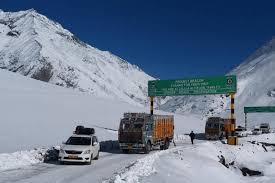
Machoi Glacier across Zoji La | Image Source: Wander On
Before facing Antarctic storms, India’s expedition team underwent rigorous cold-weather training on the Machoi Glacier across Zoji La in Jammu and Kashmir. Located at nearly 5,000 metres altitude, Machoi is one of India’s harshest glacial environments, where temperatures plunge below freezing, winds howl across icefields, and blizzards can erase visibility within minutes. The Indian Army’s High Altitude Warfare School (HAWS) uses Machoi for training soldiers in ice-craft, snow survival, and extreme cold operations.
Notably, the Indian Army was working hand in hand with the scientists, assisting them in their expedition. The specialised skills of the Indian Navy and Air Force became crucial. The Indian Navy’s Chetak helicopter, a proven asset in the icy landscape of the Siachen Glacier and naval operations at sea, became a cornerstone in India’s initial foray into Antarctica.
For India’s Antarctic mission, Machoi served as a rehearsal stage for the polar world. Meteorological officers and expedition personnel learned to operate instruments in sub-zero temperatures, build snow shelters, survive whiteouts, and function with limited oxygen and unpredictable weather. The goal was clear: if they could survive Machoi, they could survive Antarctica.
The role of the meteorological officers proved critical once the expedition reached the South Pole. They collected continuous weather data to guide aviation operations – deciding when aircraft could land on ice, when storms made flying impossible, and when scientists could safely venture outside. Their forecasts were essential for survival in a land where sudden katabatic winds and blizzards could destroy camps and aircraft within hours. Their scientific observations also contributed to global climate research and atmospheric science. Three meteorological officers from the programme were later honoured with awards for their outstanding contributions under extreme conditions.
Machoi Glacier and Antarctica are thousands of kilometres apart, but they are connected by science and survival. Both are climate sentinels—Machoi, the source of Himalayan rivers like the Sind and Dras, and Antarctica, the regulator of global oceans and monsoons. Today, Machoi is studied for glacier retreat and climate change, mirroring the scientific importance of Antarctic ice.
When Indian scientists stepped onto Antarctic ice in 1982, they carried with them the lessons of Machoi: How to survive storms, how to predict the unpredictable, and how to operate in a world of ice. February 3 is therefore not just the story of India entering the frozen frontier. It is the story of how a Himalayan glacier prepared a tropical civilisation to conquer the coldest continent on Earth.